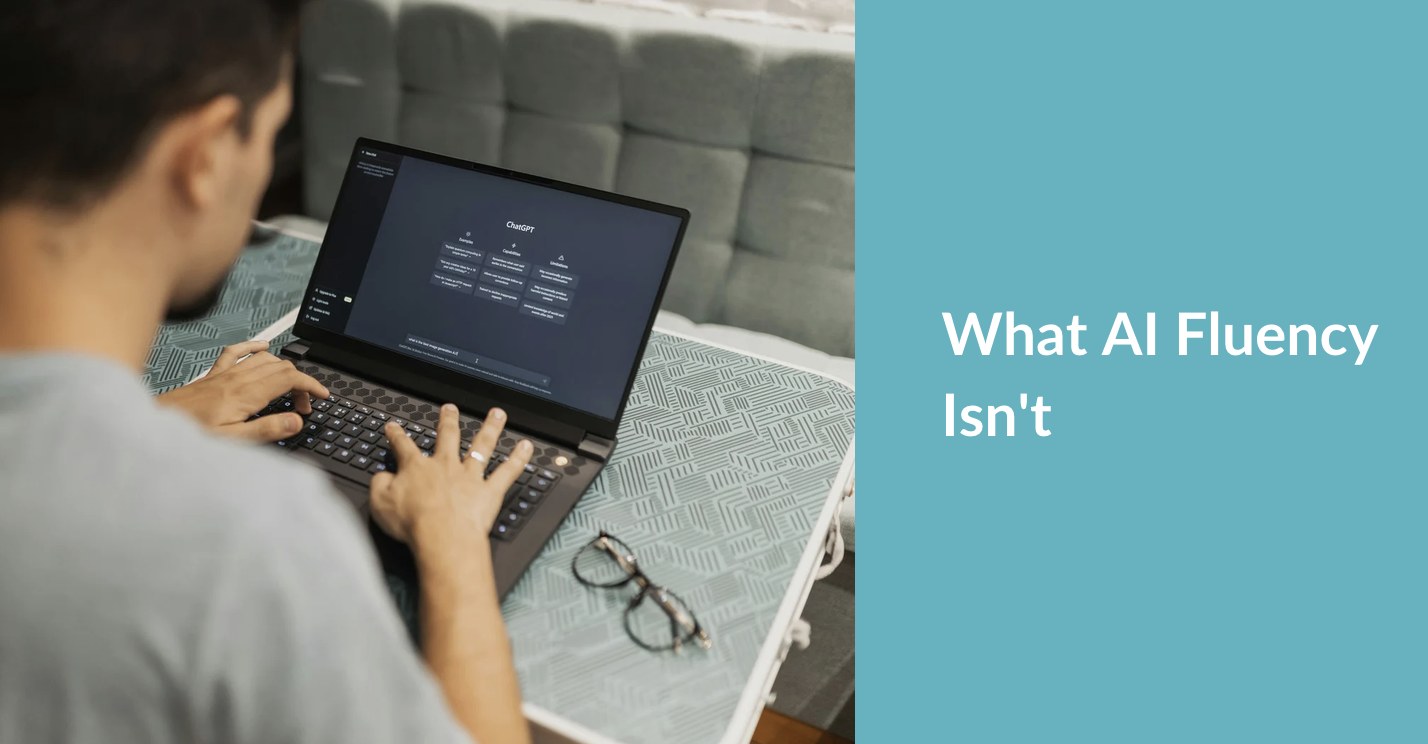
What AI Fluency Isn't
Can you trust what a candidate says about their own AI ability?
A study presented at a major learning analytics conference in early 2026 measured how well teachers' own sense of their AI ability lined up with how they actually performed on objective tests. The correlation was weak: teachers who considered themselves strong at working with AI weren't reliably the ones who tested strong at it.
The study looked at teachers specifically, not hiring candidates, but this pattern of self-assessment it documents is exactly the risk of taking a candidate's word when it comes to their own AI ability. It's a structural reason to stop asking candidates to describe their AI skill and start finding another way to see it.
A workshop wears off.
Some companies treat AI fluency as a routine task–run a workshop, send a course link, move on. But fluency is less a box to check and more like a habit, something that has to keep showing up in how a person actually works. Someone can finish a training and still default to old habits the next time a task gets difficult.Effort and discernment are what counts.
When a candidate hands a task to AI and blindly forwards whatever comes back, they’ve skipped the work. Real fluency is catching and flagging questionable data and copy, deciding what to keep and what to cut, and doing the thinking a tool can't do. Candidates worth your time will show genuine investment in the work itself, not just comfort with the tool that’s sitting next to them.
To a hiring manager, a candidate’s AI fluency self-assessment means nothing if they can’t walk the walk. Parker Dewey runs paid, project-based work that puts a candidate's actual output in front of you before you make an offer, not just their description of their own skill.
For a closer look at how to build that into your hiring process, see how you should make the work the interview.
Download Parker Dewey’s practical framework for evaluating early-career talent in the age of AI.